
Case studies
Platforms, business software, portals, and websites delivered for teams.
A selection of our projects
We needed a tool able to manage a fleet of self-service machines. Koragence structured a clear, robust platform we can rely on every day.
 Théo ChartierFounder of Onctuo
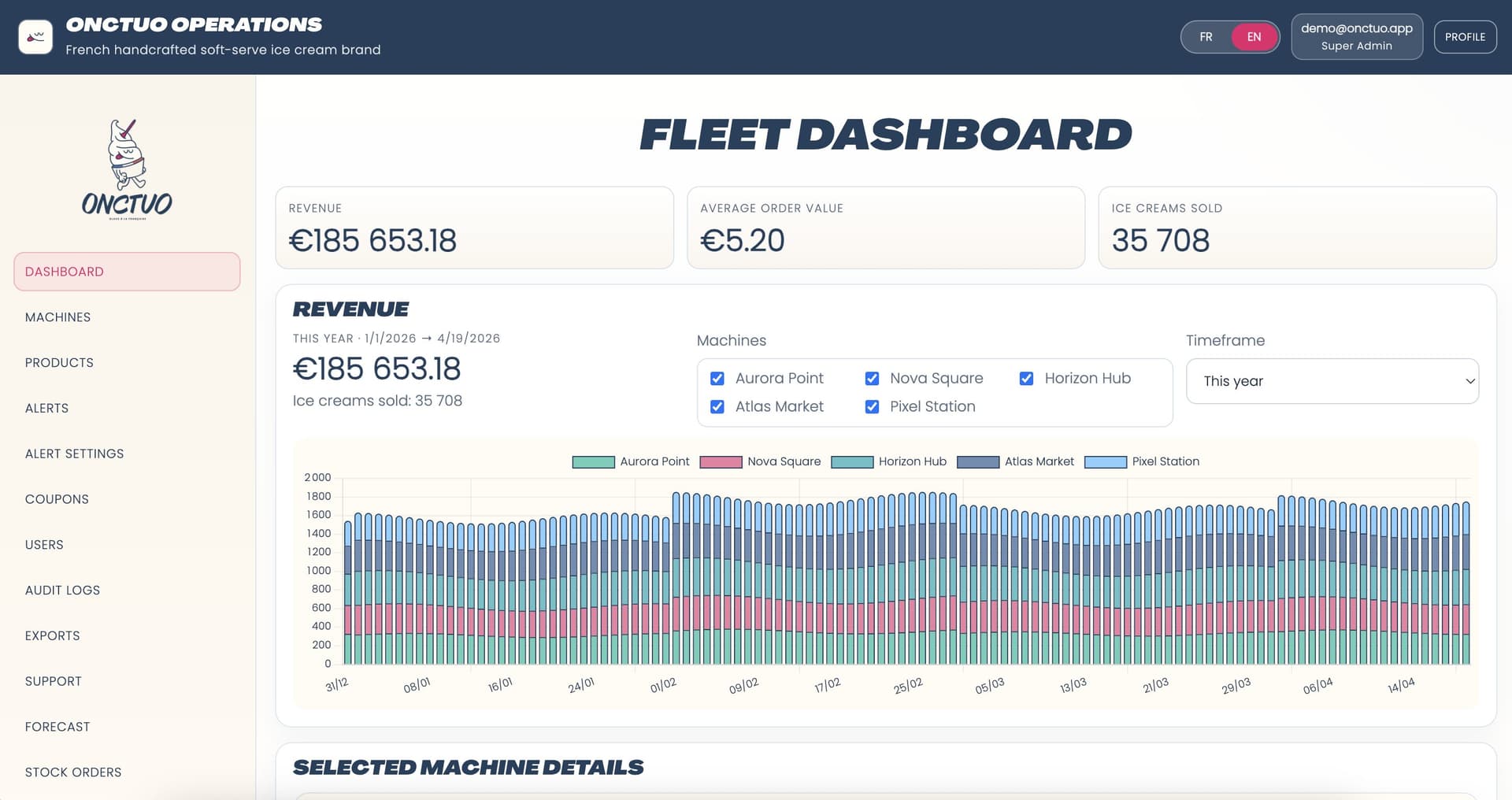
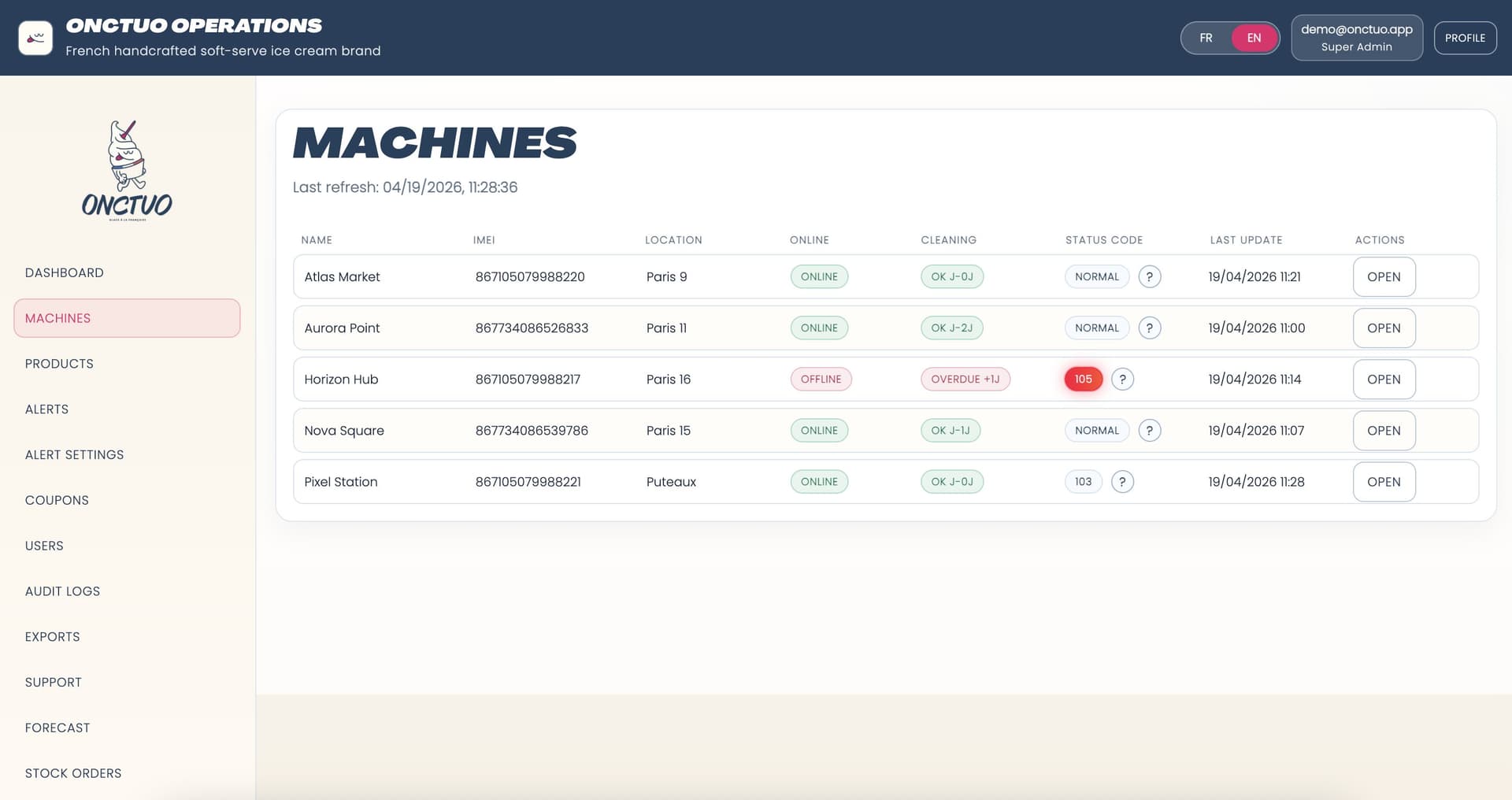
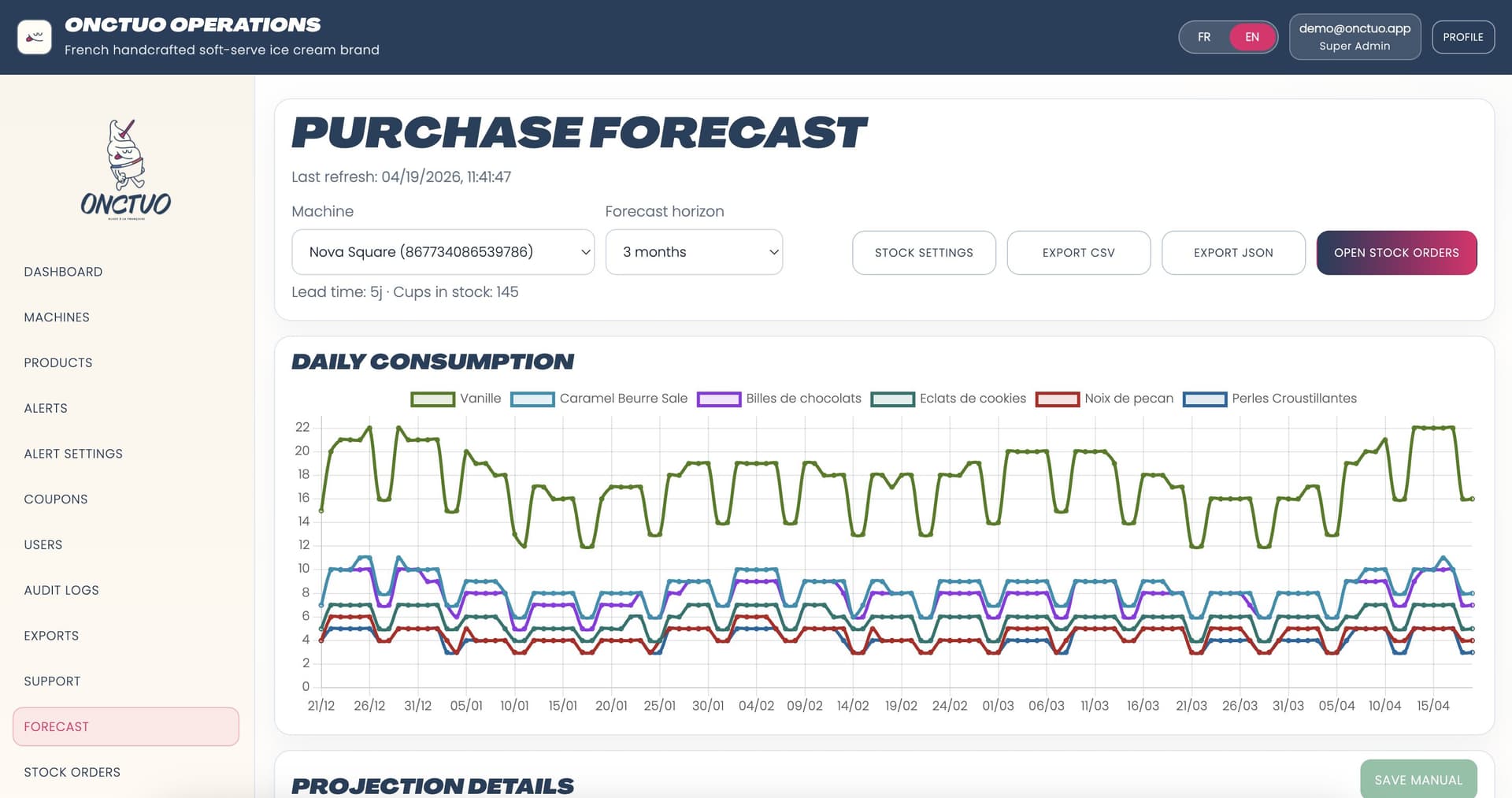
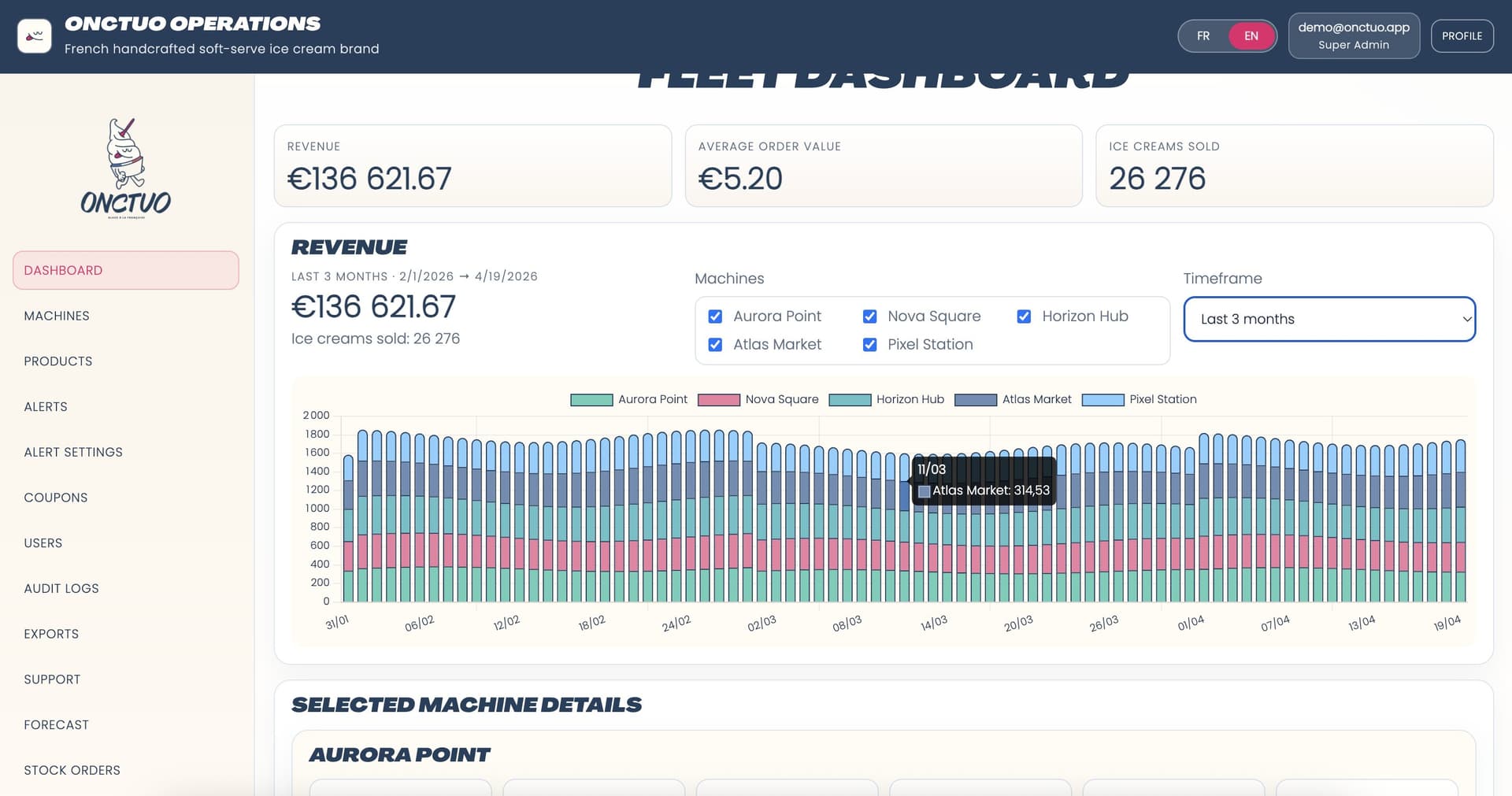
Onctuo :Fleet supervision, alerts, and field operations
Onctuo needed a supervision tool that was more useful than a supplier console alone. The platform now connects KPIs, machine states, alerts, history, forecasting, and the access rules the team actually needs inside a foundation designed for day-to-day operations.
Technologies used by Koragence include Next.js, NestJS, PostgreSQL, Docker, OVHcloud, Cloudflare.
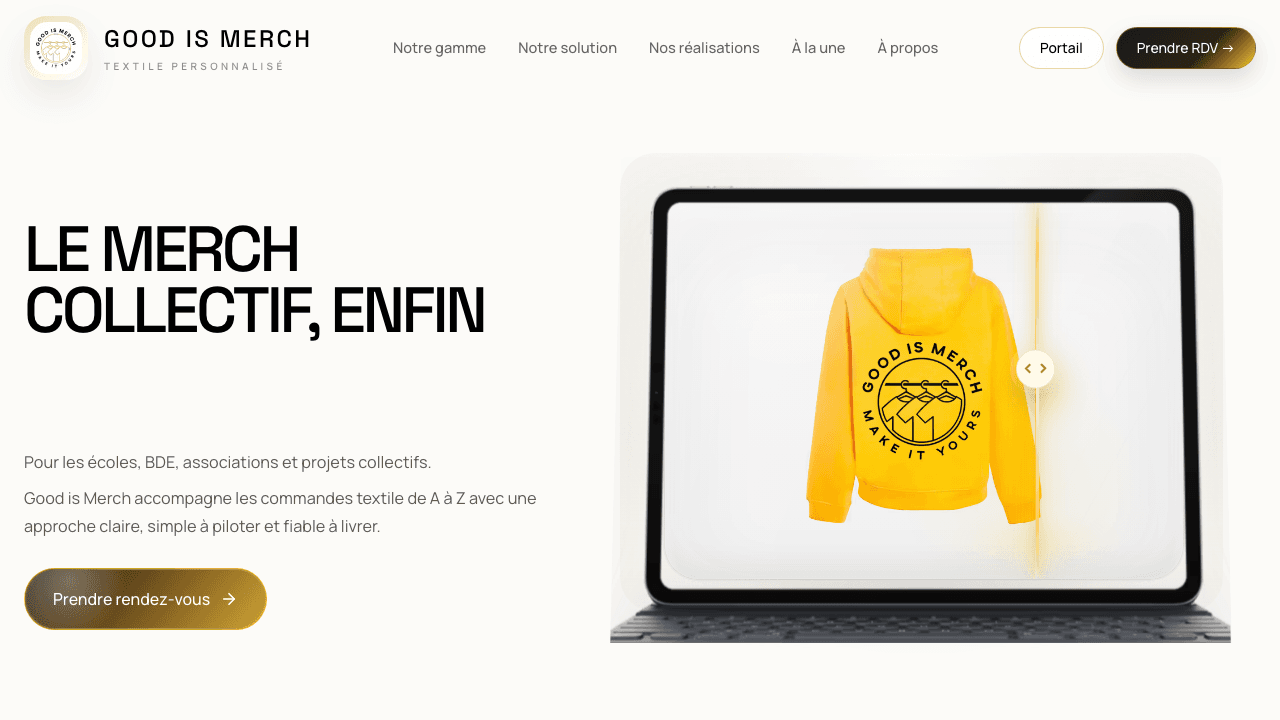
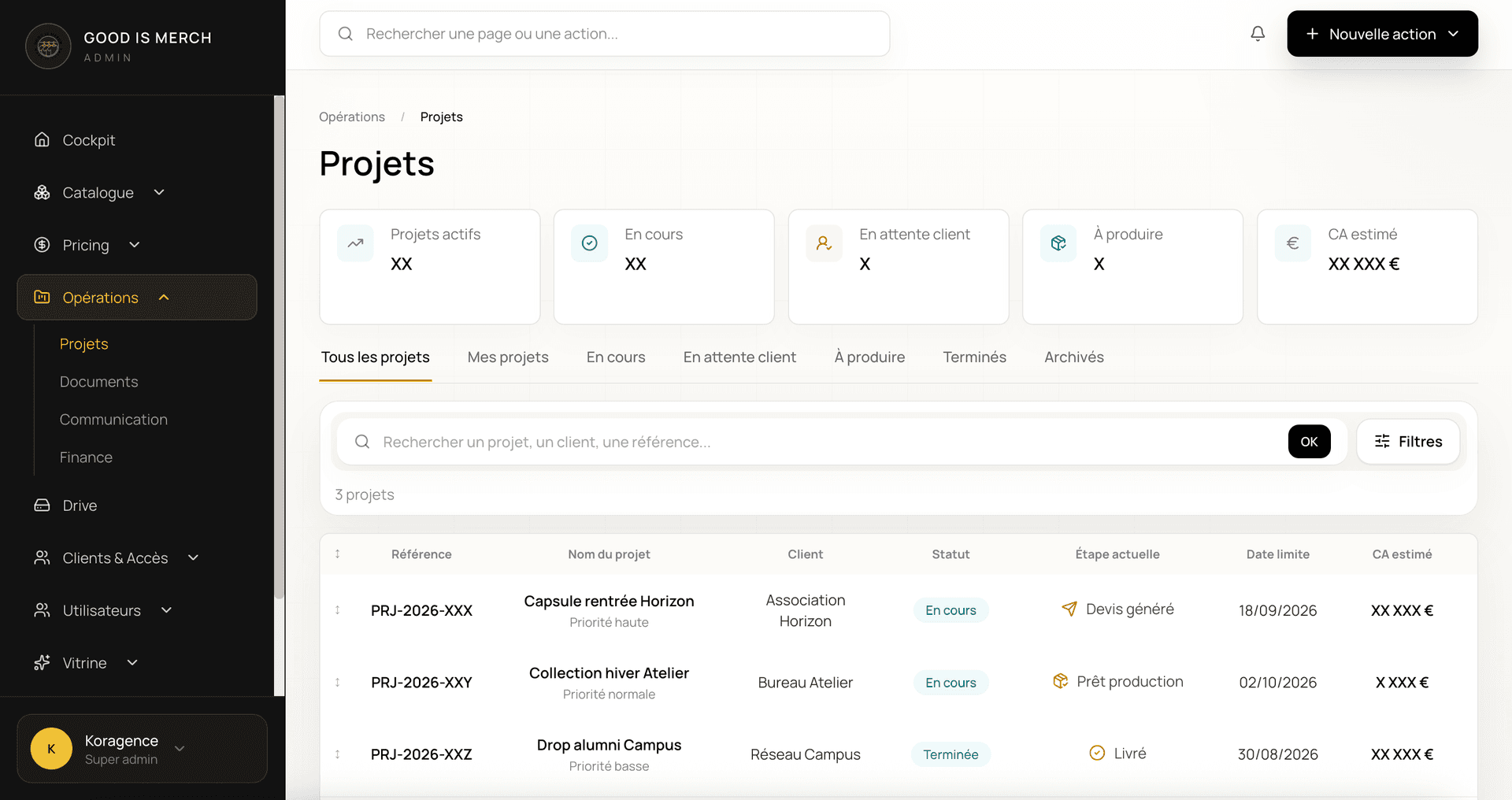
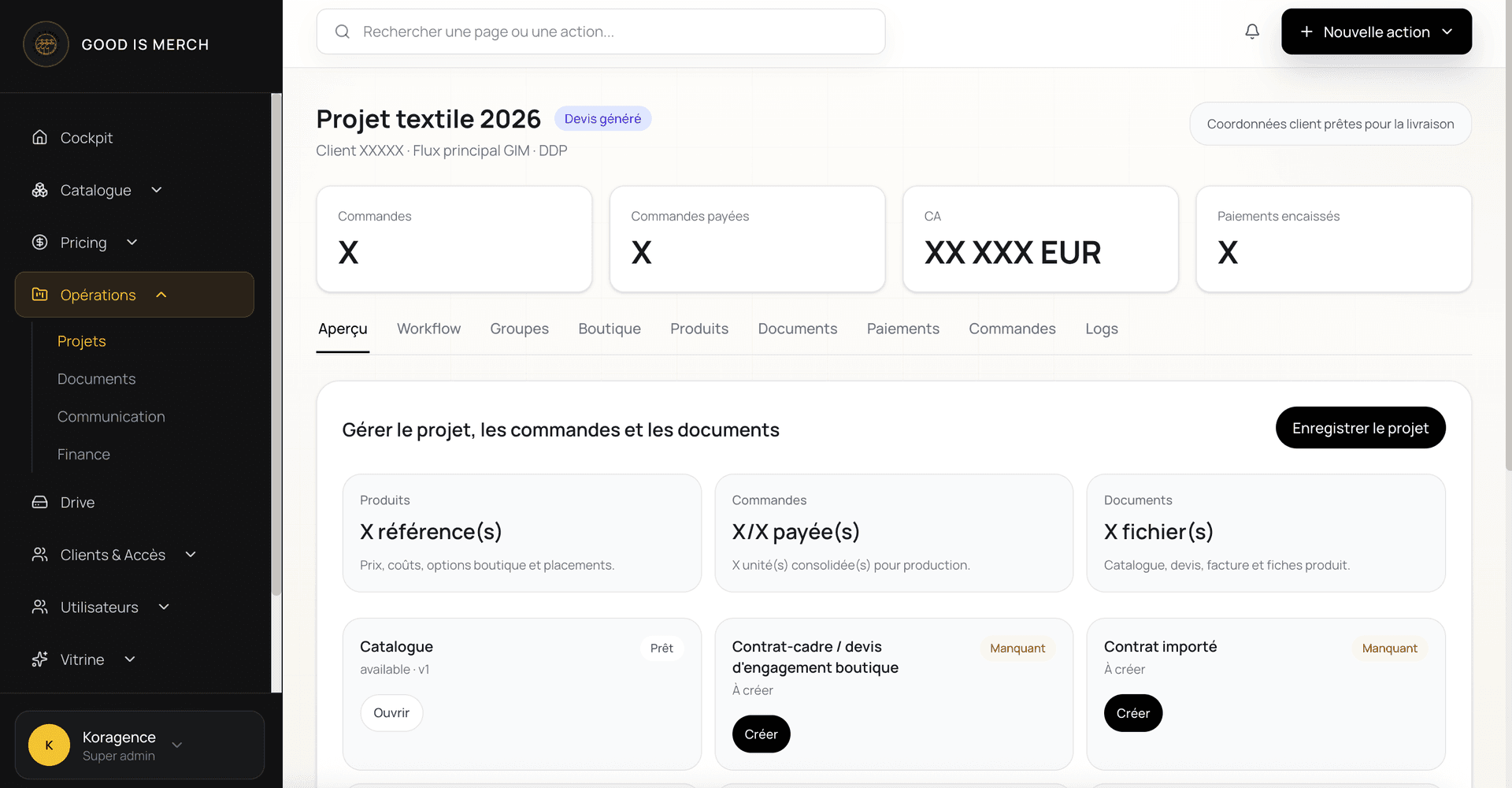
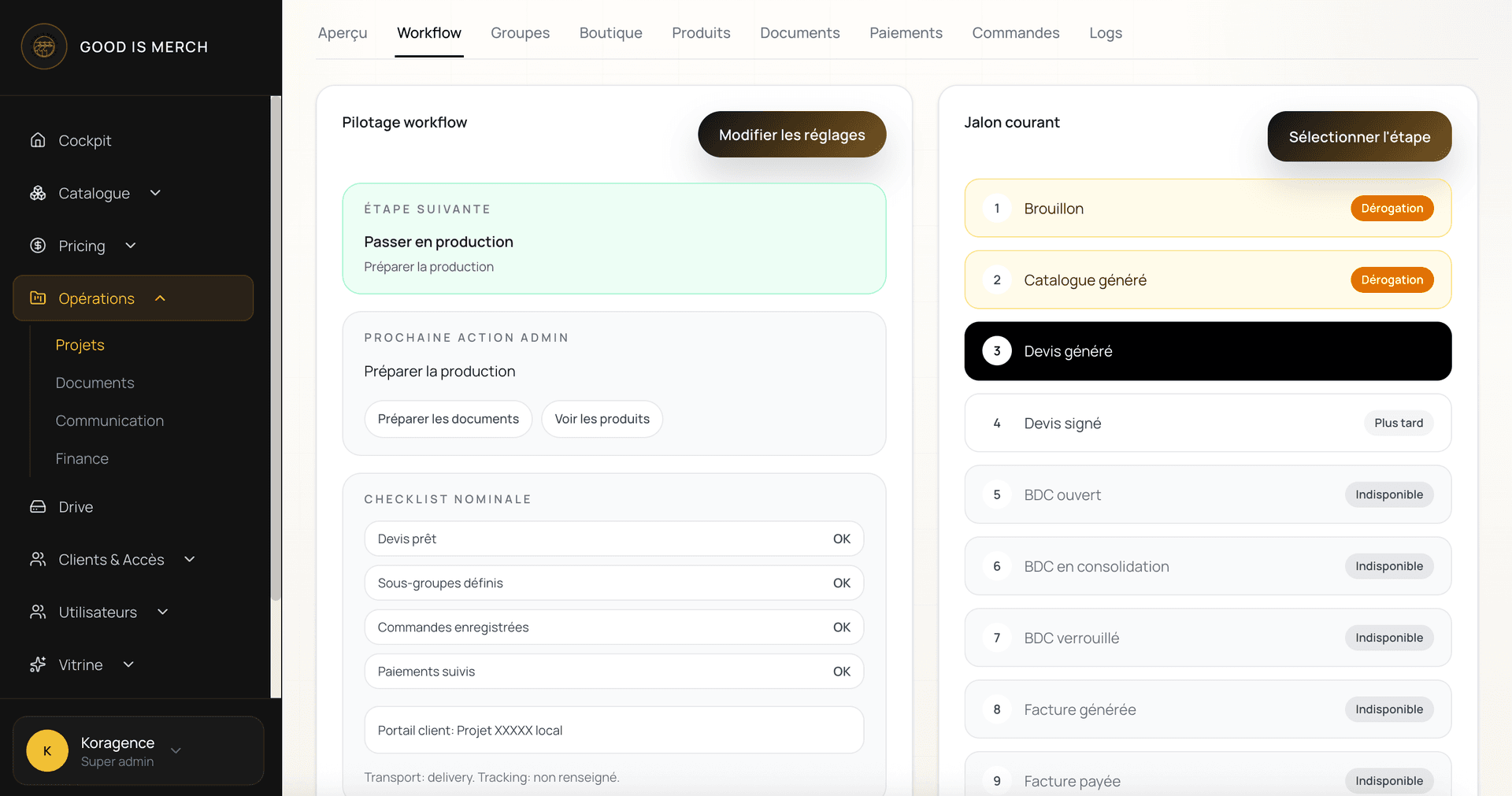
Good is Merch :Commercial cockpit, workflow, and centralized documents
The product brings into one foundation what is often scattered: commercial accounts, catalog, documents, approvals, payments, and production follow-up. The goal was less to build one more portal than to make the business flow genuinely readable.
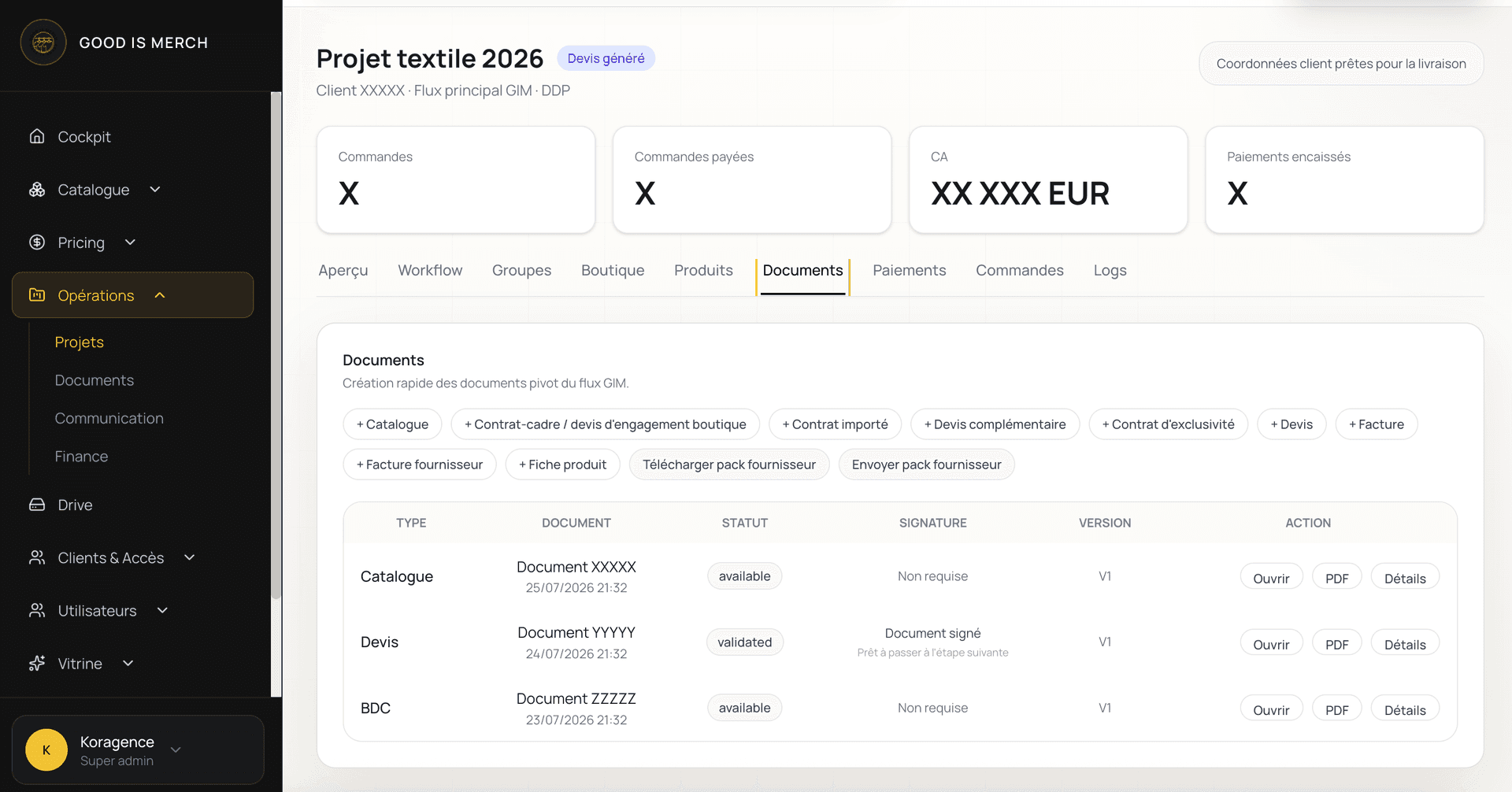
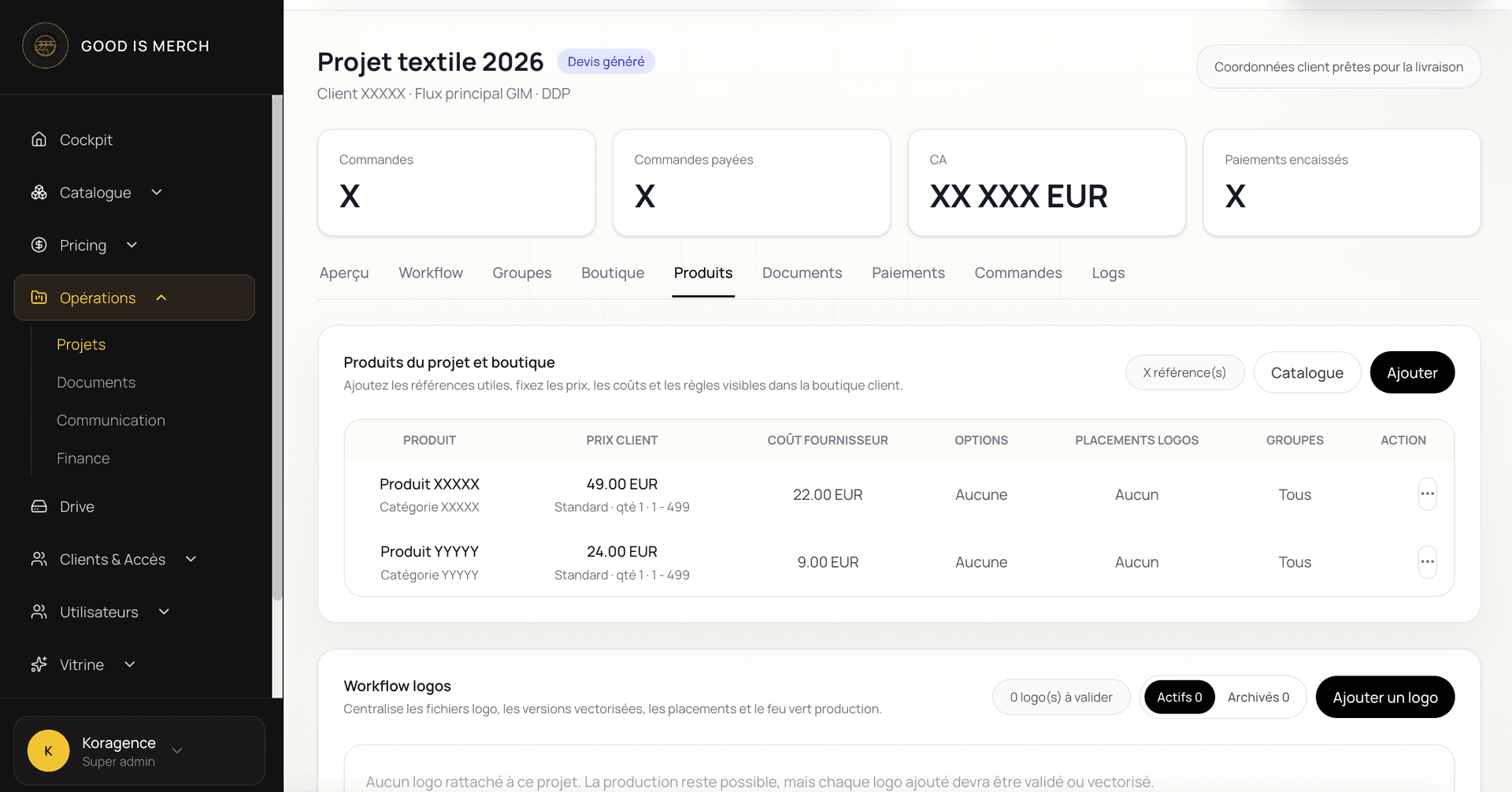
The platform gives us a solid operating base to handle more volume without losing quality. It is a real tool for growth, useful every day.
 Lennon JeaugeyCo-founder and President of Good is Merch
Technologies used by Koragence include Next.js, React, TypeScript, Stripe, Cloudflare, GitHub.
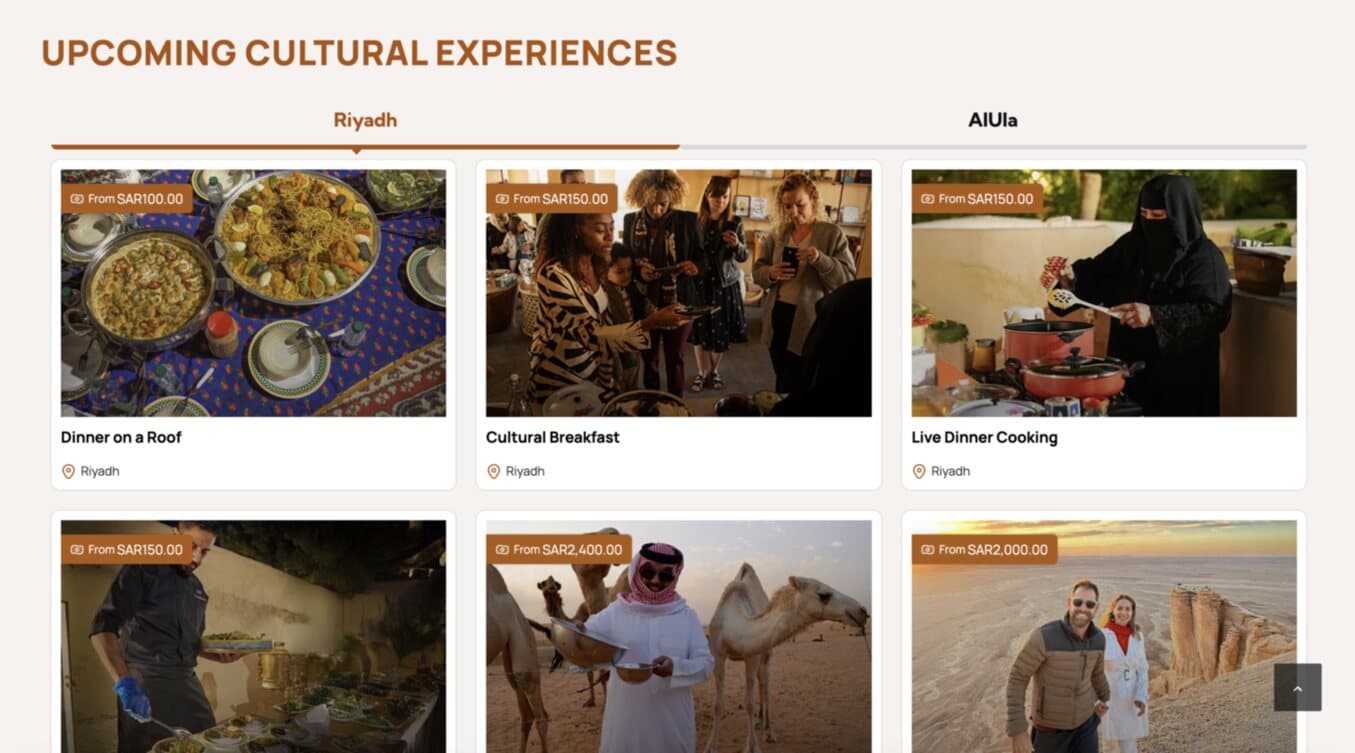
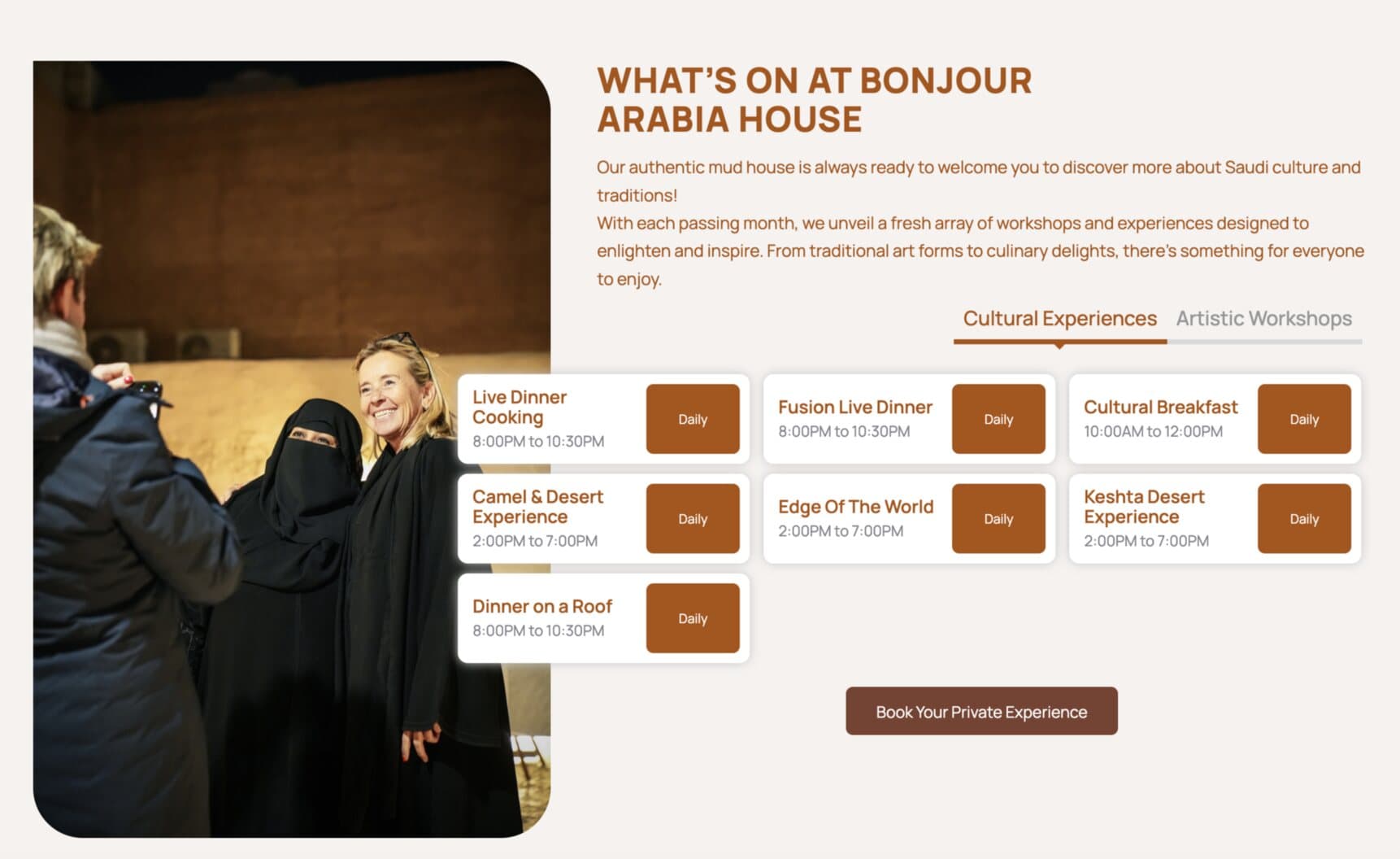
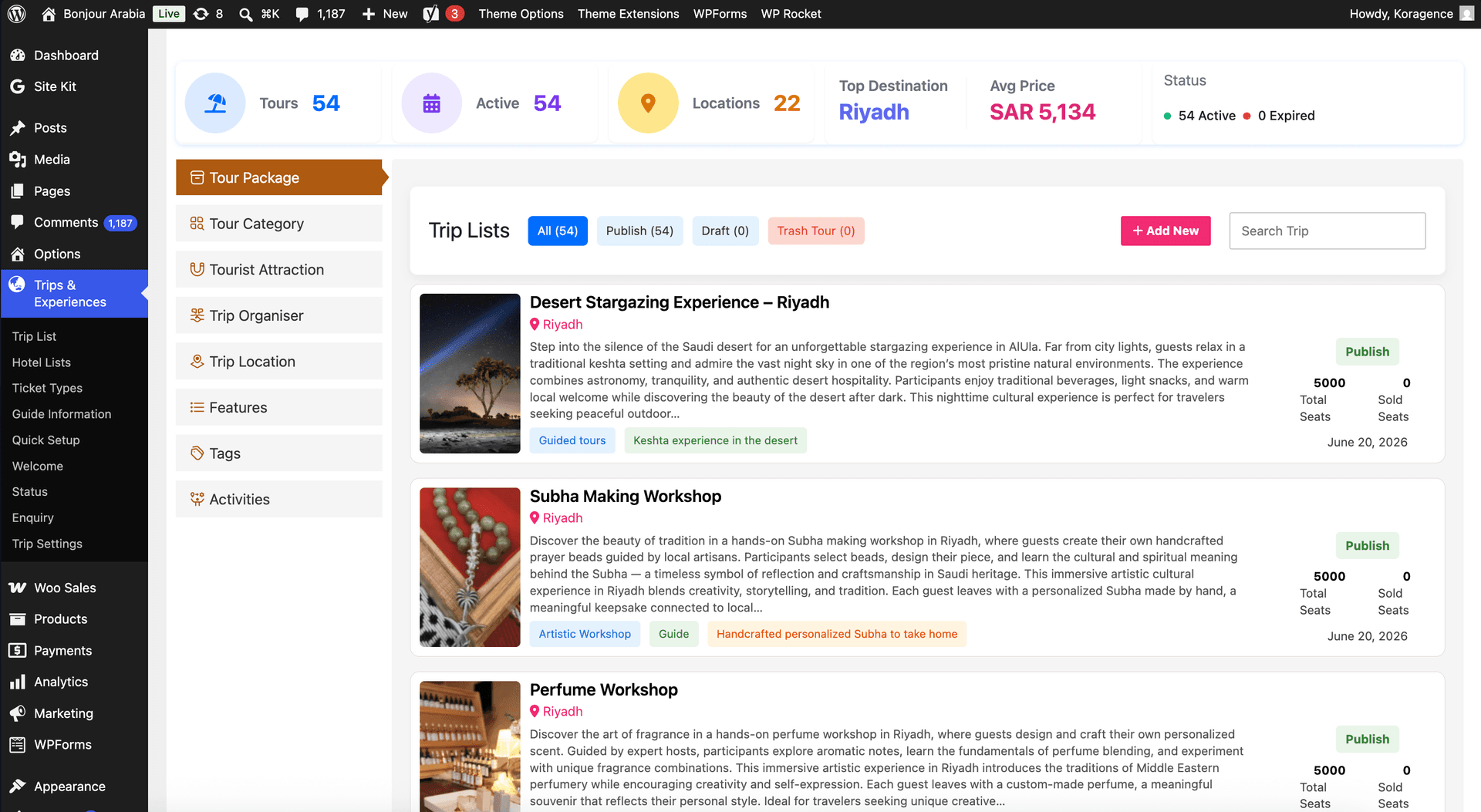
Koragence took over the existing site, audited it, and improved performance, SEO, security, and maintenance. We can now evolve content, bookings, and the day-to-day run of the site on a more reliable foundation.
 Sabrina MathieuCo-founder of Bonjour Arabia
Bonjour Arabia :Premium booking platform and experience back office
The project started with an audit of the existing setup, then moved through performance, responsive, SEO, security, booking, and maintenance work. The same foundation now supports content, destinations, MyFatoorah payments, access management, and the ongoing run of the site.
MyFatoorah

Technologies used by Koragence include WordPress, WooCommerce, MyFatoorah, PHP, Tailwind CSS, Cloudflare.
Fileen :Community & events
Fileen needed one foundation for members, subscriptions, bookings, and administration. The product now brings sign-up journeys, the member space, events, and payments into a more coherent structure.
They stayed transparent and present throughout the development and let me adjust features along the way.
 Elisabeth C.Founder, Fileen
Technologies used by Koragence include Next.js, React, TypeScript, Supabase, PostgreSQL, Stripe.
Koragence translated a premium travel vision into a clear digital identity, with the right level of detail and commercial credibility.
 Jérémie H.Founder & Chairman of Xwévi
Xwévi :Immersive journeys & premium identity
Xwévi needed a site able to explain an offer that is still unfamiliar to many visitors without oversimplifying it. The work covered visual direction, page structure, SEO, multilingual support, and the way a reader is guided toward contact.
Technologies used by Koragence include Next.js, React, TypeScript, Vercel, Cloudflare, GitHub.
Not every project is documented publicly. Some engagements remain confidential, or clients prefer not to be displayed online. For a more specific request, write to contact@koragence.com.
The Koragence team
Need to scope or relaunch a project?
Describe the context, constraints, and level of ambition. We will quickly tell you whether we are the right partner.
Discuss my project