How do you choose between AWS, Azure, OVHcloud and other providers?
The decision depends on workloads, existing ecosystem, data location, internal skills, required managed services and expected operating cost.
AWS may be relevant for a broad service catalog and heavily managed architectures. Azure integrates naturally with some Microsoft environments. OVHcloud or Scaleway may answer location or European-provider requirements. The decision should not be reduced to virtual machine pricing.
Koragence can build the migration path around the selected provider without forcing multi-cloud. The decision is tied to the application’s actual constraints and how the team will operate the target after cutover.
Lift and shift, replatforming or modernization?
Lift and shift
The workload is moved with limited changes. This can accelerate leaving an existing host when the architecture remains compatible and immediate transformation would add little value.
Replatforming
Some components change during migration. A self-managed database may move to a managed service, or a containerized application may move to a platform better integrated with the target Cloud.
Modernization
A significant part of the application or architecture is transformed. At this point, migration should be coordinated with the existing application modernization service so both scopes remain clear.
How do you map dependencies before migration?
Applications rarely move alone. The dependencies that read or write the same data must be understood before cutover: databases, files, workers, jobs, queues, external APIs, DNS, certificates, secrets and technical accounts.
This map is used to build the migration order. A component may be technically easy to move while remaining blocked by a legacy system still using its IP address, storage or database. The expected output is a dependency map, connected to an actual migration sequence rather than a technical inventory without decisions.
How do you migrate data without losing integrity?
The approach depends on data volume, write frequency and acceptable downtime. A database may sometimes be copied during a maintenance window. In other situations, data must be synchronized progressively before the final writes are switched during cutover.
Checks should cover volumes, records, constraints, files, encodings and critical application behaviors so a technically complete but functionally incorrect migration is detected. A restorable backup and prepared rollback must exist before cutover, not after a problem appears.
How should production cutover be prepared?
A controlled cutover has a planned window, ordered actions, named owners, validation criteria and a point at which rollback is still possible.
DNS, certificates, access, jobs, database connections, external integrations and monitoring must be prepared before real traffic moves. After cutover, short checks validate critical journeys, writes, asynchronous jobs and external dependencies before the migration is considered complete.
How should rollback be planned?
Rollback is not simply keeping the old server online. The team must know until when a return remains possible without losing data created after cutover.
The strategy may combine temporary retention of the old infrastructure, prior backups, data synchronization and an explicit DNS or traffic change procedure. Preparation depends on criticality: a lightly used internal application does not need the same setup as a service handling continuous transactions.
Should Infrastructure as Code be introduced during migration?
Terraform or another Infrastructure as Code approach can make the target environment reproducible and reduce manual configuration. IaC can therefore make the target easier to build, review and hand over.
IaC is a way to prepare the target, not the primary subject of this page. Detailed module, state or Terraform migration work is a separate engagement when the context requires it.
How are security and access handled during migration?
Migration provides an opportunity to bring administrative accounts, roles, secrets, certificates and provider access under control as new resources are created and old ones are later removed.
Koragence organizes the access required for the project and avoids deliberately reproducing fragile dependencies in the target. A deep IAM, network, data exposure and compromise-path review remains the scope of the AWS and Azure Cloud security audit.
What happens after the migration?
The migration ends when the new environment works, data is validated, critical journeys respond correctly and the team has the access and information required to operate it.
Obsolete resources can then be decommissioned progressively once the agreed safety period is complete. Documentation, costs, backups, monitoring and ownership must reflect the new architecture. Migration transforms and cuts over, while managed services operate after cutover.
How does Koragence deliver a Cloud migration?
1. Map the current environment
Applications, data, servers, environments, networking, domains, certificates, pipelines and dependencies are identified.
2. Define the target
The provider, required services, architecture and migration strategy are selected around actual constraints.
3. Prepare the environment
Networking, compute, storage, databases, access, secrets, monitoring and delivery are prepared before production migration.
4. Migrate and test
Workloads and data are transferred progressively when the context allows, then verified in the target environment.
5. Cut over
Traffic is transferred through a cutover runbook with checks and a rollback scenario.
6. Stabilize
The former environment is retained or removed according to the chosen strategy, then the new architecture is handed over to RUN operations.
What affects migration cost and timing?
Cost depends mainly on the surface to move: applications, environments, machines, databases, storage, integrations and dependencies. Data volume can weigh heavily when it requires progressive synchronization, long transfers or coexistence periods.
The second factor is the gap between source and target. Moving a Linux VM to a comparable VM is very different from replacing several components with managed Cloud services. Tolerance for interruption also directly affects preparation. No fixed timeline or price should be invented on this page.


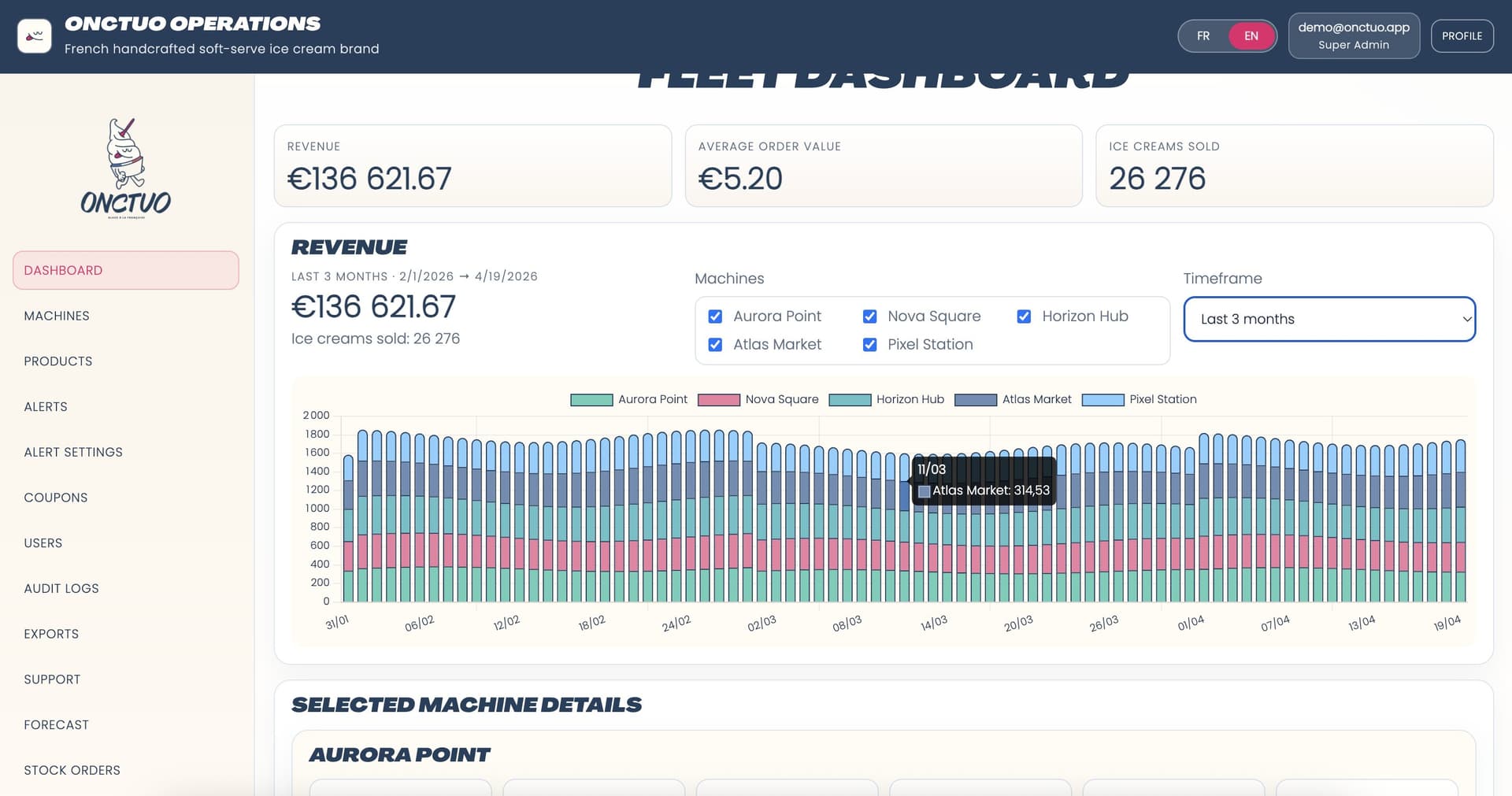





 Onctuo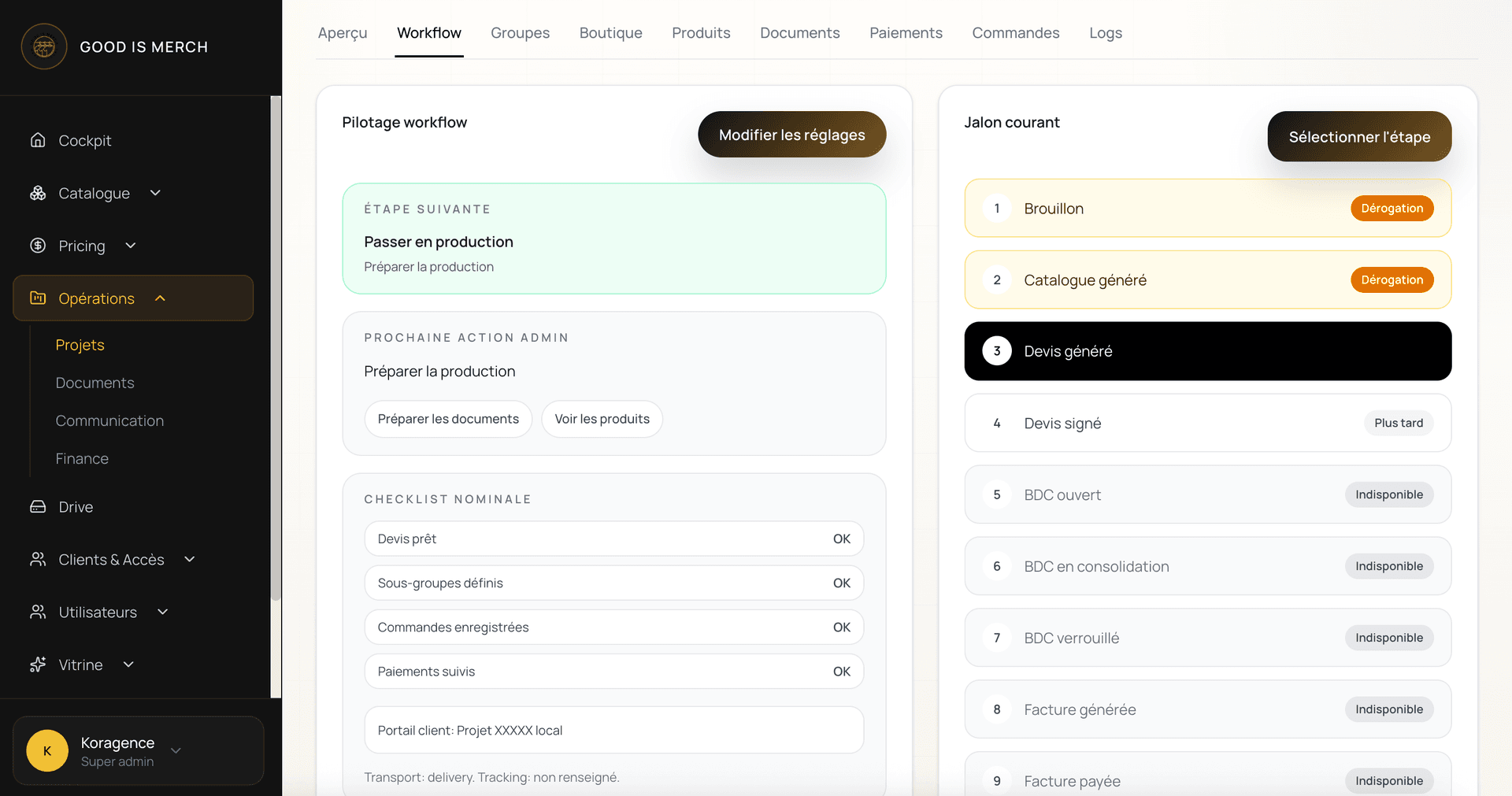
 Good is Merch